
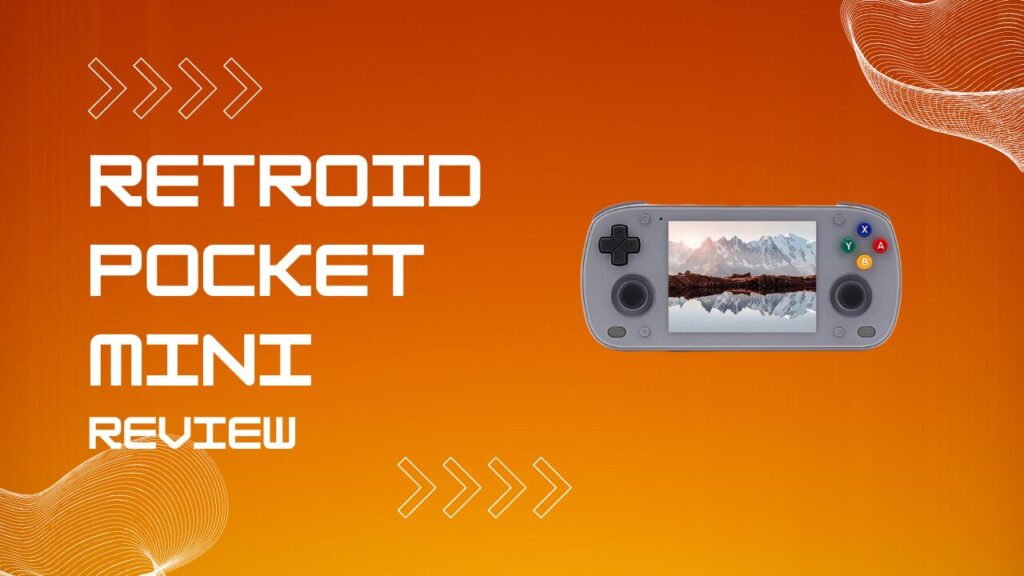
The Retroid Pocket Mini is the 4:3 AMOLED compact handheld that forced a lot of people to reconsider what a “mini” device is actually capable of. In this Retroid Pocket Mini review, I am going to cover everything: the Snapdragon 865 performance and Antutu benchmarks, what systems it can emulate, how Linux via Batocera and ROCKNIX works in practice, what the SFC and 16Bit colorways actually look like, what a teardown reveals, where to buy in the UK, and which alternatives are genuinely worth your attention heading into 2026.
Key Takeaways
- The Retroid Pocket Mini is a compact Android handheld powered by a Qualcomm Snapdragon 865 and Adreno 650 GPU, usually priced around the mid-range sweet spot for premium retro handhelds.
- It runs everything from 8-bit classics through PS2 and GameCube reliably, with Nintendo Switch sitting in the experimental category rather than the core selling point.
- Linux is a real bonus here, with Batocera and ROCKNIX available from microSD without replacing the Android install.
- Antutu performance lands well above older Retroid generations, which is why this device feels comfortable with tougher sixth-generation workloads.
- The SFC, 16Bit, Saturn, Orange, and Black versions are cosmetic variants, not different hardware tiers.
- The Odin 2 Mini, Retroid Pocket 4 Pro, and larger Retroid Pocket 5 are the three alternatives most buyers should compare before ordering.
Pros And Cons
Pros
- Excellent 4:3 AMOLED display with deep blacks and strong contrast.
- Snapdragon 865 gives the device real PS2 and GameCube credibility.
- Compact body is easy to carry without feeling cheap.
- Hall effect sticks and analog triggers make it more future-proof than many rivals.
- Linux support adds flexibility that a lot of Android-only devices cannot match.
Cons
- High Performance mode adds noticeable fan noise.
- The 3.7-inch screen is gorgeous, but still small for text-heavy PSP, 3DS, and some PS2 games.
- The Linux boot flow is not yet as polished as a true pick-up-and-play console.
- The all-glass front looks premium, but it can make you a little nervous if you toss handhelds into bags without a case.
What Is The Retroid Pocket Mini?
The Retroid Pocket Mini is a compact Android-based retro gaming handheld built by Retroid, the company behind the Pocket 4 and Pocket 5 family. Its defining feature is a 3.7-inch AMOLED screen with a native 4:3 aspect ratio at 1280×960, which makes older console libraries look right without forcing them into awkward widescreen compromises. It also marked a major shift for Retroid because the Mini moved to a Qualcomm Snapdragon 865 platform instead of the older Mediatek direction used in earlier devices.
Core Specifications At A Glance
| Specification | Detail |
|---|---|
| CPU | Qualcomm Snapdragon 865 |
| GPU | Adreno 650 |
| RAM | 6GB LPDDR4X |
| Storage | 128GB UFS 3.1, expandable via microSD |
| Display | 3.7-inch AMOLED, 1280×960, 4:3 |
| Battery | 4000mAh |
| OS | Android |
| Connectivity | Wi-Fi, Bluetooth, USB-C video output, 3.5mm jack |
| Controls | Hall effect sticks, analog triggers |
| Cooling | Active fan with multiple performance profiles |
| Weight | 217g |
The active cooling system matters more than it looks on a spec sheet. A lot of handhelds advertise performance and then quietly collapse after twenty minutes of heavier emulation, but this one can actually hold onto its pace better when the fan is allowed to work. That said, the real trick is knowing when not to chase every last benchmark point, because this handheld often feels best a notch below its maximum setting.
Colorways Explained: SFC, 16Bit, Saturn, And More
Retroid gave the Mini several colorways that clearly target nostalgia rather than plain utility. The lineup includes Black, Orange, Saturn, SFC, and 16Bit, with the SFC model borrowing the cream-and-purple look associated with the Super Famicom and the 16Bit option leaning into a darker retro-console aesthetic. None of these versions change the internals, so you are choosing a visual identity, not a performance tier.
The SFC version is probably the one most collectors will gravitate toward because it looks instantly familiar next to classic Nintendo hardware. The Saturn option is arguably the most stylish if your library leans heavier into Sega, and it has that rare trick of looking playful without becoming toy-like. I still think color matters more on handhelds than people pretend, because a device you love looking at tends to get carried more often.
The AMOLED Display: Form Factor Done Right
The 3.7-inch AMOLED panel is the reason the Retroid Pocket Mini has such a strong first impression. OLED contrast makes retro games look cleaner, black backgrounds actually disappear into the bezel, and pixel art gains that crisp, almost floating quality that cheaper LCD panels usually cannot reproduce. At a glance, this is the sort of screen that makes other handhelds in the same price class look immediately older.
The practical friction shows up when the wow factor wears off and you start loading systems that were never really designed for such a compact panel. PSP strategy menus, denser PS2 HUDs, and certain 3DS layouts are technically very playable, but they ask more from your eyes than a 4-inch or 5-inch device would. I found the Mini almost perfect for arcade, SNES, PS1, and most GameCube sessions, then a little less relaxing once a game started crowding the screen with tiny text.
There is also a technical wrinkle that matters to the more obsessive crowd. The panel implementation has been discussed because shader behavior does not always line up as neatly as people expect on a premium AMOLED handheld, which means scanline-heavy CRT setups are not always as clean as the raw display quality suggests. If you mostly play with straightforward scaling and light shader use, you will probably never care. If you are the sort of person who spends an hour tuning aperture grille presets, you will notice faster than most.
Performance And Retroid Pocket Mini Antutu Scores
The Snapdragon 865 is what turns the Mini from a pretty handheld into a genuinely capable one. In broad terms, this chip gives the device enough CPU and GPU headroom to feel comfortable with the systems buyers actually care about at this price, especially GameCube and PS2. Antutu numbers place it well above older Retroid generations, but the more useful takeaway is simpler: it has enough power to feel easy rather than strained.
Geekbench 6, 3DMark, And Thermal Behavior
Synthetic scores are useful here mainly because they explain why the Mini behaves the way it does once you start pushing it. The Snapdragon 865 and Adreno 650 combo delivers a clear step up from older mid-range handheld silicon, and active cooling helps it avoid dropping off as quickly during longer sessions. In practical terms, that means better sustained Dolphin and PS2 performance, not just a prettier chart.
The hidden annoyance is that the highest performance mode is not always the smartest mode. Standard mode already gives this device a lot of breathing room for GameCube at 2x resolution and a large chunk of PS2 at 2x, so jumping to the loudest profile does not always transform the experience enough to justify the extra noise. I kept drifting back to Standard for real play because it felt like the best balance of speed, battery, and sanity, which is not the sexy answer but it is the honest one.
Nintendo Switch testing also falls into this category. Yes, some lighter titles can surprise you with custom drivers and careful settings, but once a handheld starts needing that much babysitting, I stop treating it as a core buying reason and start treating it as a bonus.
Retroid Pocket Mini Emulation: What Can It Run?
Emulation range is the real reason this handheld matters. The short version is that it covers the classic era through sixth-generation systems extremely well, while later platforms become a case-by-case hobby project rather than a guaranteed feature. That distinction matters because a lot of product pages blur the line between “boots” and “plays well,” and those are not the same thing.
8-Bit, 16-Bit, And Handheld Systems
Everything in the 8-bit and 16-bit world is effortless here. NES, SNES, Mega Drive, Game Boy, Game Boy Advance, Neo Geo, arcade boards, and similar systems all run with enough overhead for shaders, filters, fast-forward, and higher internal rendering where relevant. The 4:3 OLED panel makes this tier feel almost suspiciously well matched to the hardware.
This is also where the Mini makes the strongest emotional case for itself. It feels like a handheld built by people who actually understand why retro players still care about aspect ratio, saturation, and black levels. I have used faster devices that impressed me less because they never looked this right.
PS1, N64, Dreamcast, And Sega Saturn
PlayStation 1 is easy work for the Mini, and it benefits hugely from the panel quality. Nintendo 64 performs well across the library, Dreamcast is in a very healthy place, and Saturn is better than many people will expect if they are used to cheaper hardware tapping out early. That matters because Saturn remains one of those systems people mention casually and then quietly avoid when performance gets messy.
Saturn is also a good example of where the Mini earns its keep. It has enough horsepower to keep things comfortable in a lot of real-world play, and the 4:3 presentation feels appropriate rather than adapted. The Saturn colorway also happens to make these games feel absurdly on-brand, which is completely superficial and still somehow relevant.
PS2 And GameCube
PS2 and GameCube are the performance headline. A lot of the library on both systems runs very well with sane settings, often at 2x resolution, and the device rarely feels like it is scraping by on raw luck. That is a big deal because the difference between “playable” and “pleasant” becomes obvious fast once you have used enough mid-tier handhelds.
The friction lives in the outliers. Some PS2 games still want per-game tweaks, some GameCube titles can show odd rendering behavior, and a bad sleep-resume moment can sometimes leave you troubleshooting instead of playing. Burnout 3, for example, is the kind of title that quickly tells you whether a handheld handles stress gracefully, and this is one of those cases where most of the experience is strong but a few edge-case hiccups remind you that Android emulation still rewards patience. I would still call PS2 and GameCube a strength here, but not a magical one-click guarantee.
Nintendo Switch
Nintendo Switch on the Mini sits in the experimental lane. The chip is strong enough to make some lighter titles look possible, especially with the right drivers and settings, but it is not the main story of the device and it should not be treated like one. If your real goal is Switch first and retro second, there are better places to spend your money.
That does not mean the results are useless. It means the margin for annoyance is higher, the setup is fussier, and the small 4:3 screen is a weird match for a platform designed around widescreen output. I like that the Mini can poke into this territory, but I would never buy it just for that.
Retroid Pocket Mini Linux: Batocera And ROCKNIX
Linux support is one of the Mini’s most interesting advantages because it gives the handheld a second identity. Instead of being locked into Android only, you can boot community Linux options like ROCKNIX from microSD and keep the internal Android setup intact. That kind of flexibility is catnip for people who want a more console-like front end without giving up Android when they need it.
The less glamorous reality is that Linux on this device still asks for a bit of cooperation. The boot flow is not totally seamless, because you need to restart into the right path rather than expecting an always-automatic handoff, and early builds can carry small bugs that remind you this is still enthusiast territory. I liked having Linux available, but I never forgot I was using a smart enthusiast device rather than a finished appliance.
Linux Boot And Emulator Troubleshooting
| Situation | What You Will Notice | What Usually Helps |
|---|---|---|
| ROCKNIX does not boot from the card | The handheld drops back into Android instead of loading Linux | Restart and use the boot selection flow again, making sure the microSD card is seated properly |
| Controls keep repeating one direction | Menus scroll endlessly up or down until input is reset | Press the same direction again, then back out of the menu or reboot if it persists |
| A PS2 game slows down after screen sleep | Performance feels worse after turning the screen off and back on | Fully close the emulator and relaunch the game instead of relying on sleep-resume |
| A GameCube game shows menu or UI glitches | Menus look wrong even though gameplay is mostly fine | Try a different internal resolution or graphics backend before assuming the game is broken |
| Linux feels less consistent than Android | Some systems work, but a few edge cases are fussier than expected | Use Linux for the cleaner front end, then switch to Android for the titles that need better emulator maturity |
The nice part is that once Linux is actually running, the overall experience is promising. Native Pico-8 support, a more console-like launcher feel, and access to a cleaner library presentation all make the Mini more versatile than an Android-only rival. In my experience, Linux here feels like a real value add, just not a replacement for Android in every scenario yet.
Teardown: What Is The Retroid Pocket Mini Made Of?
A teardown-minded look at the Mini shows a device that was designed with more care than the price might suggest. The shell feels dense, the cooling solution is there for a reason rather than marketing decoration, and the control layout makes sense for the kind of systems this handheld is best at. The result is a compact device that avoids the hollow, throwaway feel some budget retro handhelds never escape.
The friction point is the all-glass front. It looks great on a desk and gives the handheld a sharper, cleaner face, but it also makes the device feel slightly less casual when you are throwing it into a bag or jacket pocket. I am not especially precious with handhelds, and even I caught myself wanting a sleeve or case more often than usual with this one.
There are also smaller quality-of-life quirks that only show up after regular use. Some users notice slight button rubbing against the front plate early on, and speaker placement can be easier to block than ideal depending on how tightly you grip the shell. Neither issue kills the device, but they are exactly the sort of things that separate a great handheld from a flawless one.
The hall effect sticks remain one of the safer long-term bets in the build. They reduce the usual anxiety around drift, and paired with analog triggers they make the Mini feel less compromised than many tiny handhelds that still treat controls like an afterthought.
Price, Availability, And UK Buying Guide
The Retroid Pocket Mini is usually easiest to find through Retroid’s own storefront and the usual global reseller channels. For UK buyers, that generally means comparing direct import pricing, marketplace listings, and the occasional local stock appearance rather than expecting permanent domestic availability. The lowest sticker price is not always the true total once shipping, taxes, and timing enter the picture.
The practical buying friction is not the base cost, it is the final landed cost. A deal that looks great at checkout can feel less charming once shipping and import charges stack on top, especially if you are chasing a specific colorway that goes in and out of stock. If you are buying from the UK, it is worth treating delivery speed, customs certainty, and return friction as part of the price rather than an afterthought.
The SFC and Saturn variants also tend to attract the most attention, so buyers with a strong preference should not assume every restock will be equally available across all colors. Cosmetic demand sounds trivial until the version you actually want is the one that disappears first.
Best Retroid Pocket Mini Alternatives
The right Retroid Pocket Mini alternative depends on what you think the Mini gets wrong. If you want more raw power, the answer shifts one way. If you want a larger screen, it shifts another. If you want lower cost and can tolerate weaker build or display quality, that opens a third path.
The AYN Odin 2 Mini is the most obvious step up if performance is your obsession. It is stronger, especially for later systems, and it makes more sense for buyers who care about stretching into harder emulation targets. The trade-off is obvious too: you pay more, and the Mini loses some of its value advantage the moment you compare price tags honestly.
The Anbernic-style budget alternatives make more sense if your target is PS1 through some PS2 rather than a premium compact experience. You can spend less, but you usually give up some combination of screen quality, Linux flexibility, thermal consistency, or overall polish. Cheap is not free, it just moves the compromise somewhere else.
The Retroid Pocket 4 Pro review is still worth reading if you want a fuller grip and a roomier feel for longer sessions. The Retroid Pocket 4 review adds useful context on the older performance tier that the Mini effectively leaves behind. If you already suspect you want a larger device with more future-facing headroom, the Retroid Pocket 5 review is the page to open next because that model pushes the ceiling much higher.
Retroid Pocket Mini Review: Final Verdict
The final verdict in this Retroid Pocket Mini review is pretty simple. This is one of the best compact retro handhelds you can buy if your priorities are OLED image quality, true 4:3 presentation, strong sixth-generation emulation, and the option to dabble in Linux without turning the whole device into a science project. It gets more right than wrong, and most of its flaws are the kind that show up only after you have already admitted the thing is very good.
The Mini is not the handheld I would buy for Switch-first use, and it is not the one I would hand to someone who hates tinkering. It is the handheld I would recommend to someone who knows exactly why a 4:3 OLED matters and wants a device that can make PS2, GameCube, Saturn, Dreamcast, and older systems feel properly at home. For that buyer, the Retroid Pocket Mini remains an easy recommendation.